
Epoxy Garage Floor Coating in St. Johns County, FL

Epoxy Garage Floor Coating in St. Johns County, FL: Heat, Humidity, and What Actually Holds Up
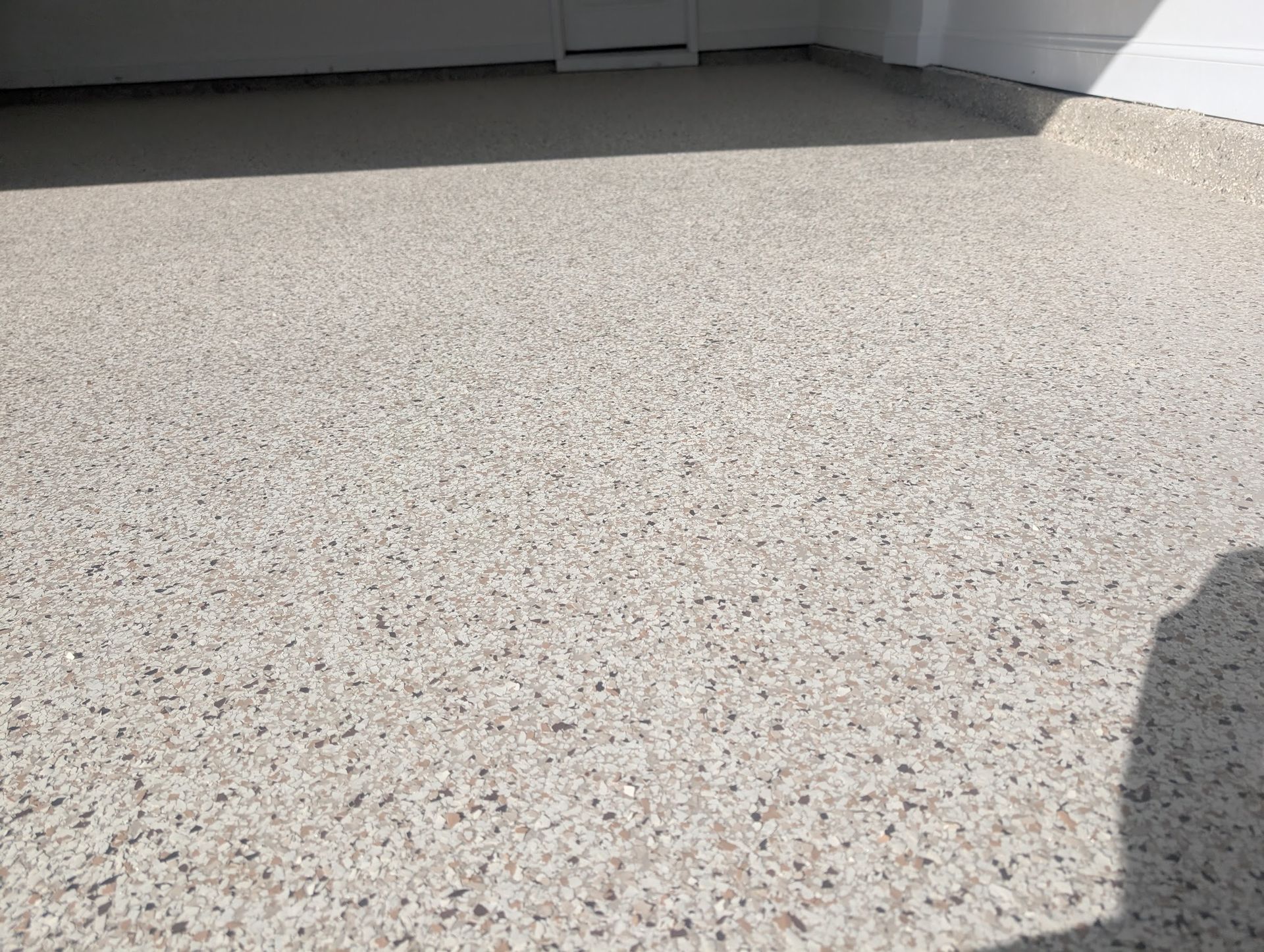
Florida garages take more punishment than garages almost anywhere else. Heat radiating through a concrete slab all summer, humidity that never fully breaks, the occasional tropical storm blowing moisture under the door — the conditions in St. Johns County are genuinely harsh on flooring surfaces. Epoxy coatings handle all of that well when they're installed correctly. When they're not, you end up with peeling, bubbling, or delaminating floors within a year or two. The difference comes down to surface preparation, product selection, and whether the installer actually understands Florida's specific climate challenges.


At Outdoor Transformations, we install epoxy coatings for garages, patios, and commercial floors across St. Augustine, Nocatee, Ponte Vedra Beach, Palencia, and World Golf Village. Here's what every homeowner in Northeast Florida should know before hiring someone to coat their floor.


Why Florida's Climate Is Hard on Epoxy - and How Good Installs Handle It

Epoxy bonds to concrete through a chemical adhesion process. In Florida, two conditions consistently compromise that bond when installers cut corners:


Moisture Vapor Transmission

Florida's high water table and humidity mean concrete slabs in St. Johns County, Anastasia Island, and along the coast are almost always carrying some moisture vapor. That vapor migrates upward through the slab. If epoxy is applied over concrete with high moisture vapor emission, the coating delaminates from beneath - it bubbles and peels, often within the first summer. A proper installation includes a moisture vapor test before any product goes down. Skipping that test is the single most common reason epoxy garage floors fail in Florida.


Thermal Expansion

Concrete expands and contracts with temperature swings. In a Northeast Florida garage that hits 100+F in August and cools overnight, that movement is significant. Cheaper epoxy products crack at the expansion joints or along the perimeter. Industrial-grade coatings with the right flexibility rating handle this; big-box store kits generally don't.


Professional Epoxy vs. DIY Kits: What's Actually Different

The $100-$200 DIY epoxy kits sold at hardware stores use water-based paint with low epoxy solids content - typically 30-50% solids. Professional epoxy coatings run 90-100% solids, meaning the coating builds significantly thicker and bonds at a chemical level rather than just adhering at the surface. The performance difference in Florida's conditions is not marginal; it's the gap between a coating that lasts 10+ years and one that starts peeling before the warranty expires.

Beyond the product itself, professional surface preparation - diamond grinding or shot blasting the concrete to open the pores - is what creates the mechanical bond that holds up to vehicle traffic, oil drips, and Florida heat. No amount of product quality makes up for skipping that step.


What to Verify Before Signing an Epoxy Quote

  • Will you perform a moisture vapor emission test before starting?
  • What is the solids content of the epoxy product being used?
  • How do you prepare the surface - acid etch, diamond grind, or shot blast?
  • How many coats are included, and what is the build thickness?
  • Is a topcoat or polyaspartic finish included for UV resistance?
  • How do you handle cracks or spalls in the existing concrete before coating?
  • What is the cure time before vehicle traffic?


Florida-Specific Failure Modes to Watch For

  • Peeling or bubbling within 6-18 months - almost always a moisture vapor or surface prep failure
  • Yellowing or UV fade - standard epoxy is not UV stable; patios and exposed areas require a UV-resistant topcoat
  • Hot tire pickup - some lower-grade epoxies soften under hot tires in summer; polyaspartic or urethane topcoats prevent this
  • Cracking at control joints - indicates product flexibility was insufficient for Florida's thermal cycling
  • Slippery when wet - a proper install includes slip-resistant aggregate; smooth finishes in Florida humidity are a safety issue


How Much Does Epoxy Garage Floor Coating Cost in St. Johns County?

Based on our pricing for epoxy installations in St. Augustine and Northeast Florida:


Basic epoxy flooring: $8-$10 per sq ft (500 sq ft garage: $4,000-$5,000; 1,000 sq ft: $8,000-$10,000)


Epoxy flake coating (decorative finish with broadcast flake): $10-$14 per sq ft (500 sq ft: $5,000-$7,000; 1,000 sq ft: $10,000-$14,000)

Final price depends on surface condition, design complexity, and any crack or spall repairs needed before coating. We provide itemized quotes - no lump sums that hide what you're actually paying for.


When Epoxy Is the Right Call - and When It Isn't

Epoxy is the right choice for garage floors, workshops, patio slabs, and commercial floors that need a durable, chemical-resistant, easy-to-clean surface. It's not the right call for surfaces with significant structural cracks, severe moisture intrusion that can't be corrected, or heavily contaminated concrete that can't be properly prepared. We tell homeowners in Mandarin, St. Augustine Shores, Jacksonville Beach, and Palm Coast the same thing: if the slab isn't a good candidate for epoxy, we'll say so rather than coat over a problem and let it fail.

For outdoor patios in particular, we assess whether paver installation or concrete resurfacing might be a better long-term fit depending on the condition and exposure of the surface.


How Outdoor Transformations Approaches Epoxy Installations

Chris Gobeli and our crew approach every epoxy project with the same detail-oriented standard we bring to paver and hardscape work. We test before we coat, grind before we apply, and use industrial-grade products rated for Florida's climate - not the same formulation you'd spec for a climate-controlled warehouse in the Midwest. We've completed epoxy installations across St. Johns County and Duval County, and our 5.0-star rating reflects the fact that we don't rush through the prep work that determines how long the floor actually lasts.


Get a Free Estimate for Epoxy Coating in St. Johns County

Ready to upgrade your garage floor or patio surface? We offer free on-site estimates throughout Northeast Florida. Give Chris a call at (904) 896-6928 or visit youroutdoortransformation.com to schedule. We'll assess the slab, discuss finish options, and give you a clear number before anything gets started.

September 30, 2026
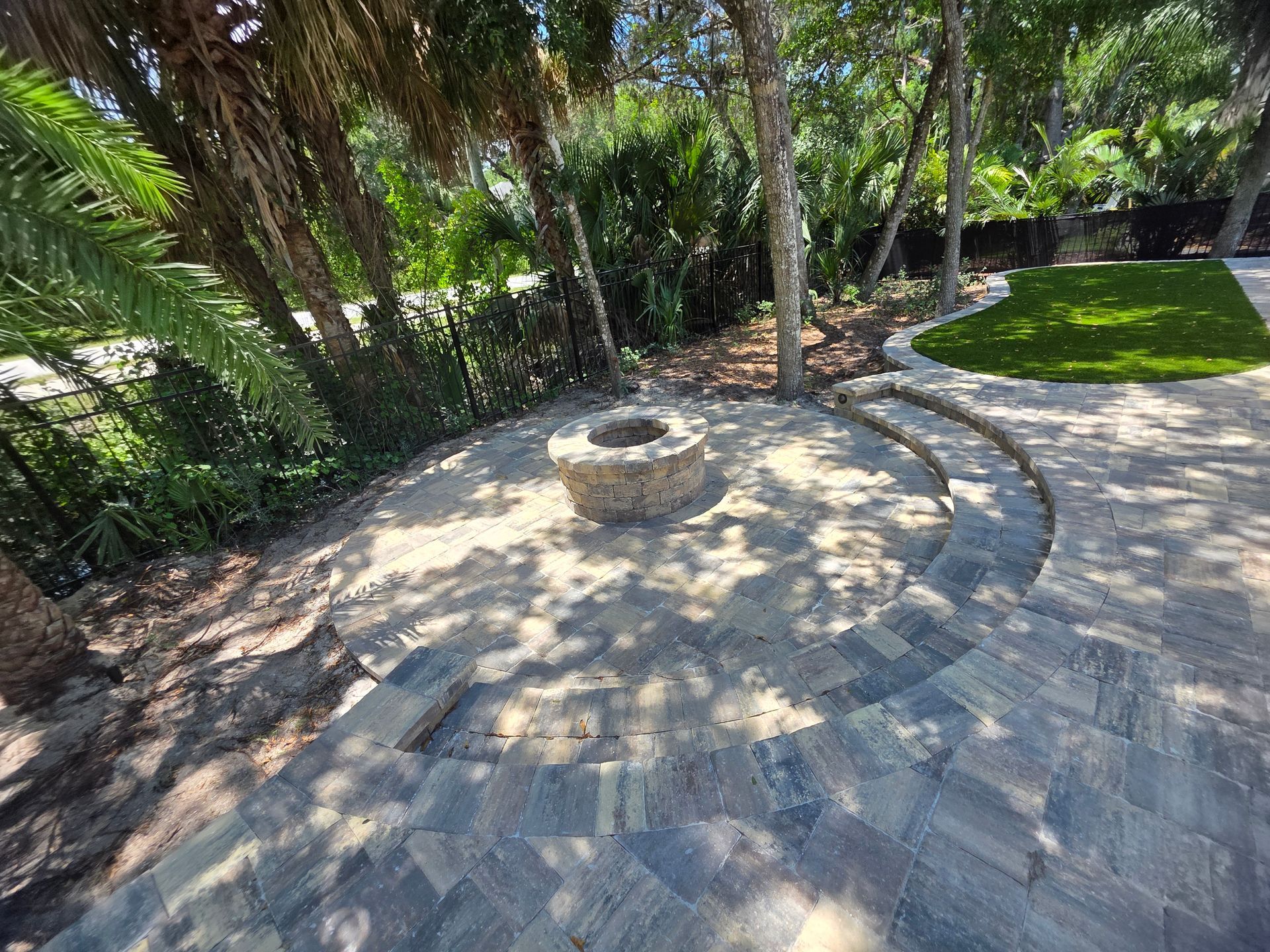
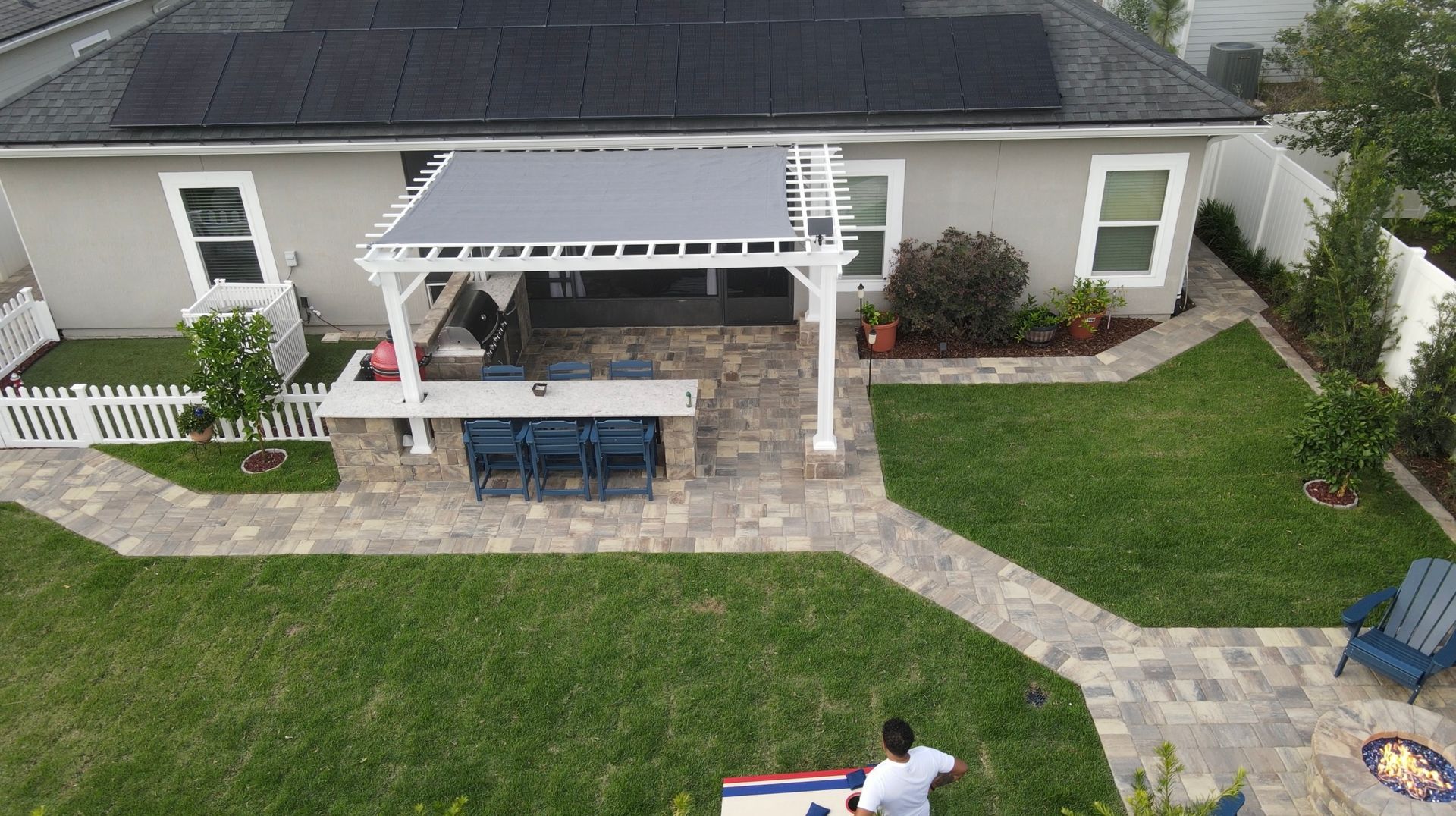
Fruit Cove and the surrounding St. Johns County are full of backyards built for year-round outdoor living, and a well-designed paver patio is often the feature that ties the whole space together. Here are a few directions homeowners in the area have been gravitating toward, and what to consider for each. St. Johns County's mix of larger suburban lots and Florida's outdoor-friendly climate means backyard patios here tend to get used far more than in colder regions — which is exactly why it's worth thinking through layout and function carefully before committing to a design. The Extended Outdoor Living Room One of the most popular directions we see is a patio designed as a true extension of the indoor living space — often paired with outdoor lighting and a fire feature, creating a space that gets used well into the evening rather than just for daytime gatherings.  This approach typically means larger covered or partially covered areas, comfortable seating zones sized like an actual living room, and lighting layered enough to feel intentional rather than just functional — string lights for ambiance, path lighting for safety, and accent lighting on any landscaping or water features nearby. Pool Deck Integration For homes with a pool, extending paver design from the pool deck into an adjacent patio area creates visual continuity across the whole backyard rather than a pool deck and a separate, disconnected patio. This works especially well with a consistent paver material and color running from one zone into the next. Multi-Zone Layouts Larger St. Johns County lots have room for distinct zones within one patio footprint — a dining area, a lounge seating area, and sometimes a separate fire pit zone, each defined by subtle changes in paver pattern or a border detail rather than physical walls. This gives a backyard functional structure without feeling closed off. A common approach is to anchor each zone with a specific function in mind from the start: a dining zone sized and positioned near the kitchen or grilling area for easy food service, a lounge zone oriented for conversation rather than foot traffic, and a fire pit zone set slightly apart so smoke and heat don't interfere with the other areas. Low-Maintenance Pairings Pairing a paver patio with artificial turf for the surrounding lawn area has become increasingly popular for busy families who want the look of a finished backyard without the ongoing maintenance of natural grass in Florida's heat and humidity. Firepits, Benches, and Built-In Seating Built-in seating walls, paver benches, and custom fire pits add function without requiring additional furniture, and they hold up well outdoors compared to furniture that needs to be covered or stored. This is part of our broader landscaping and outdoor living work, often designed together with the patio itself rather than added on afterward. Planning Around Florida's Sun and Rain Any patio design in this part of Florida benefits from thinking about shade and drainage early rather than as an afterthought. Pergolas, mature tree canopy, or strategically placed shade structures make a patio usable during peak summer heat, while proper base drainage keeps the space from pooling water during the region's frequent afternoon storms. Start Designing Your Fruit Cove Patio Outdoor Transformations designs and installs custom paver patios throughout Fruit Cove and St. Johns County . Call (904) 896-6928 or request a complimentary quote to start planning your space.
September 29, 2026
Florida's climate is tough on outdoor surfaces — intense UV exposure, heavy seasonal rain, high humidity, and for coastal properties, salt air on top of all of it. Not every paver pattern or material handles that combination equally well, and picking based on looks alone can mean more maintenance down the road than you bargained for. Because so much of Florida's outdoor living happens on these surfaces — pool decks, driveways, patios used year-round — the pattern and material choice isn't purely cosmetic. It affects how the surface handles heat, how it drains after a summer downpour, and how much upkeep it needs over the years. Herringbone: The Structural Standout For driveways specifically, herringbone is widely considered the strongest interlocking pattern because the angled placement locks pavers together in multiple directions, resisting the shifting and spreading that vehicle weight can cause over time. It's a strong choice for Florida driveways that need to hold up to daily traffic without loosening at the edges. Running Bond and Basketweave: Reliable for Patios For patios and walkways that don't carry vehicle weight, running bond and basketweave patterns offer a clean, classic look with solid interlock, and they're generally more budget-friendly to install than herringbone due to simpler cutting requirements. Material: Why Travertine Performs Well in Florida Travertine is a natural stone that stays notably cooler underfoot in direct sun compared to concrete pavers — a real advantage around Florida pool decks where bare feet meet hot surfaces all summer. It's also naturally slip-resistant when honed or brushed, which matters around water. Material: Concrete Pavers for Value and Range Standard concrete pavers remain the most cost-effective option and come in the widest range of colors and finishes, making them a strong fit for driveways and larger patio areas where budget and design flexibility both matter. Material: Brick and Cobblestone for Classic St. Augustine Character Given St. Augustine's historic character, brick and cobblestone remain popular choices for homeowners wanting a driveway or walkway that complements the area's architectural style, while still offering the durability advantages of an interlocking paver system. How Drainage Affects Pattern and Material Choice Florida's heavy summer rain events mean drainage performance deserves as much attention as looks. Permeable paver systems, which allow water to filter through the joints into the base layer rather than running off the surface, are worth considering for low-lying areas or properties prone to standing water after storms. The base preparation underneath matters just as much here as the pavers themselves. Sealing: The Step That Protects All of the Above Regardless of material or pattern, sealing matters significantly more in Florida than in drier climates. A quality sealer protects against UV fading, resists mold and algae growth in Florida's humidity, and for coastal properties, helps resist salt air corrosion on the paver surface.  Get a Recommendation for Your Space Not sure which pattern or material fits your project? Outdoor Transformations installs pavers across St. Johns and Duval County and can walk you through what performs best for your specific property. Call (904) 896-6928 or request a complimentary quote .
September 23, 2026
It's one of the most common questions we get from St. Augustine homeowners planning a driveway, patio, or pool deck project: pavers or concrete? Both are solid choices, but they perform differently in Florida's climate, and the right answer depends on what matters most to you — upfront cost, long-term maintenance, or how the surface looks over time. There's no universally correct answer here, which is part of why the debate keeps coming up. What changes the calculus for most homeowners is understanding how each material actually behaves over 10, 15, or 20 years in a Florida yard — not just how it looks on install day. Upfront Cost Poured concrete is typically the more affordable option upfront, especially for large, simple surfaces like a straight driveway. Pavers cost more initially due to material and labor-intensive installation, though the gap narrows with decorative concrete finishes like stamping or staining. It's worth noting that the initial cost gap doesn't tell the whole financial story. Concrete's lower upfront price can be offset over time by repair and resurfacing costs that pavers largely avoid, which is why we encourage clients to think in terms of total cost of ownership rather than just the installation invoice. Long-Term Durability in Florida's Climate This is where pavers often pull ahead. Concrete is a single continuous slab, which means it cracks as one piece when the ground shifts — and Florida's sandy soil, heavy seasonal rain, and occasional freeze events all create that kind of movement over time. Pavers are individual units set on a compacted base, so they flex slightly with ground movement rather than cracking outright. Humidity and rain also affect the two materials differently. Concrete can develop surface staining, efflorescence, or mildew growth in Florida's wet, humid conditions, especially in shaded areas. Pavers, particularly with a quality sealer, tend to resist staining better and are easier to spot-clean without leaving a visible patch. Repair and Maintenance This is the biggest practical difference. If a section of concrete cracks or stains, repairing it usually means patching or resurfacing a visible section that rarely blends perfectly with the surrounding slab. With pavers , a damaged unit can be individually removed and replaced without disturbing anything around it — a repair that's both cheaper and far less noticeable. This matters more in Florida than in drier climates, since tree roots, irrigation runoff, and heavy rain events all increase the odds of needing a repair at some point over a surface's lifespan. Knowing the repair will be clean and localized rather than a visible patch job is a real factor in the decision for a lot of our clients. Design Flexibility Concrete can be stamped, stained, or scored for a decorative look, but pavers offer a wider native range of colors, shapes, and patterns without needing additional finishing work. For homeowners wanting a distinctive look — herringbone patterns, mixed materials, or a natural stone appearance — pavers typically deliver more design options straight out of the box. Heat and Comfort Underfoot Around pools and patios especially, surface temperature matters. Standard concrete and dark-colored pavers can get uncomfortably hot underfoot in direct Florida sun. Lighter-colored pavers and certain natural stone options like travertine stay noticeably cooler, which is worth factoring in for any surface near a pool deck. Which One Fits Your Project If budget is the primary driver and you're covering a large, simple area, concrete is often the practical choice. If long-term durability, easier repairs, and design flexibility matter more, pavers tend to be the better investment over the life of the surface — particularly for driveways and patios that will see years of Florida sun and rain. Get a Recommendation for Your Property  Outdoor Transformations installs both pavers and concrete across St. Augustine and St. Johns County, and we'll walk you through which fits your project and budget. Call (904) 896-6928 or request a complimentary quote .
September 14, 2026
Atlantic Beach homeowners weighing a paver driveway usually have the same two questions: what's this actually going to cost, and what does the process look like start to finish. Both answers depend on a handful of factors specific to coastal Northeast Florida, not just square footage. A driveway is one of the first things anyone sees when they pull up to your home, and it's also one of the hardest-working surfaces on your property — daily vehicle weight, sun exposure, and in Atlantic Beach's case, salt air off the coast. Getting the material, base, and installation right the first time saves a lot of headaches down the road. What Actually Drives the Cost Material choice is the biggest variable. Our paver driveway installations use everything from standard concrete pavers to premium options like travertine, brick, and cobblestone, and the price spread between those is significant. Beyond material, the existing site condition matters — removing old concrete or asphalt, correcting drainage, and the total square footage all factor into the final number more than most homeowners expect going in. Other cost factors that often get overlooked: the complexity of the layout (a driveway with curves, multiple angles, or a circular turnaround costs more to cut and lay than a straight rectangle), how much excavation and grading the site needs before base work can even begin, and whether the project includes additional features like a paver apron connecting to the garage or a decorative border in a contrasting material. Why Atlantic Beach Sites Need Extra Planning Being this close to the coast changes a few things about the installation. Sandy, well-draining soil is actually an advantage for paver base preparation compared to heavier inland clay soils, but salt air exposure means material selection matters more — some paver finishes and sealers hold up to coastal conditions better than others over the long run. Drainage is another Atlantic Beach-specific consideration. Coastal properties often sit at a lower elevation relative to groundwater, and heavy seasonal rain events common to Northeast Florida summers mean a driveway needs proper slope and base drainage built in from the start, not added as an afterthought once water starts pooling. The Installation Process, Step by Step A typical paver driveway project starts with excavation to the proper depth, followed by a compacted base layer — usually crushed limestone or similar aggregate — that does the real structural work of supporting vehicle weight. A layer of bedding sand goes down next, then the pavers are set in the chosen pattern, cut to fit the edges, and compacted into place with a plate compactor. Polymeric sand is swept into the joints to lock everything together and resist weed growth, and edge restraints are installed to keep the whole system from shifting over time. Before any of that happens, though, a proper assessment walks the site to check existing grade, drainage flow, and whether old concrete or asphalt needs to be removed first. This step determines a lot about the final cost and timeline, which is why we don't quote a driveway project sight unseen. Choosing a Pattern and Material for a Driveway Not every pattern that looks good on a patio performs well on a driveway. Herringbone is generally considered the strongest interlocking pattern for vehicle traffic because the angled placement resists shifting in multiple directions at once — something a straight running-bond pattern can't do as effectively under the lateral force of tires turning in and out of a garage. Timeline Expectations Most residential driveway installations take a matter of days rather than weeks once work begins, though weather and site conditions can shift that. Unlike a concrete pour, there's no curing period before the driveway can be used — pavers are ready for vehicle traffic almost immediately after installation and compaction. This is one of the more underrated advantages of pavers versus concrete for homeowners who don't want to plan around a multi-day cure window. Maintaining a Paver Driveway Long-Term Once installed, a paver driveway is relatively low-maintenance, but a few habits extend its life significantly. Resealing every few years protects against UV fading and helps the joint sand resist washout during heavy rain. Addressing any individual settled or shifted pavers early — rather than waiting — prevents a small issue from spreading to neighboring pavers over time.  Get a Quote for Your Atlantic Beach Driveway Outdoor Transformations installs paver driveways throughout Atlantic Beach and greater St. Johns and Duval County. Call (904) 896-6928 or request a complimentary quote to see what your project would actually cost.
July 6, 2026
Paver Patios in St. Augustine, FL: Design Ideas, Materials, and What to Expect
June 12, 2026
How Much Does a Paver Patio Cost in St. Augustine, FL?