
Artificial Grass in Ponte Vedra Beach, FL: Is It Worth It for Florida Homeowners?
Artificial Grass in Ponte Vedra Beach, FL: Is It Worth It for Florida Homeowners?
Keeping a natural grass lawn looking good in Northeast Florida is a full-time job. Between the summer heat, heavy rainfall, salty air near the coast, and the constant battle against weeds and pests, a lot of Ponte Vedra Beach homeowners spend more time and money maintaining their lawn than they ever expected. Artificial grass has become a serious alternative — and for the right property, it's one of the smartest investments you can make in your outdoor space.
Here's an honest look at what artificial grass actually delivers in a Florida coastal environment, and what to think through before you commit.
Why Florida Homeowners Are Making the Switch
The appeal of artificial grass in Northeast Florida comes down to a few practical realities. Natural grass in St. Johns County and Duval County faces challenges that homeowners in cooler, drier climates simply don't deal with:
- Florida's summer heat and UV intensity stresses warm-season grasses even when they're well-maintained.
- Heavy rainfall creates drainage problems and promotes fungal growth in natural turf.
- Salt air in coastal communities like Ponte Vedra Beach, Vilano Beach, and Atlantic Beach degrades natural grass over time.
- Irrigation costs are significant — and water restrictions during dry seasons make it harder to keep natural grass alive.
- Pest pressure from chinch bugs, armyworms, and grubs is relentless in Florida's warm climate.
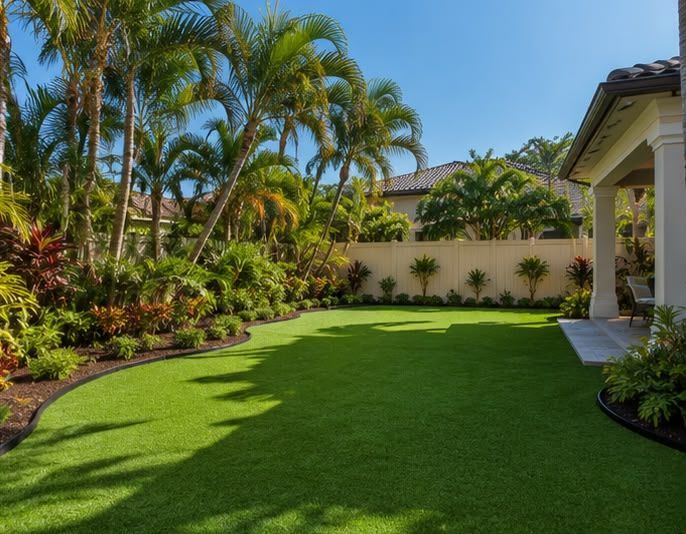
Artificial grass eliminates all of these. Once it's installed correctly, it stays green year-round with no irrigation, no fertilizer, no pesticides, and no mowing.
Where Artificial Grass Works Best
Artificial turf isn't the right solution for every part of a property — but it works exceptionally well in specific applications:
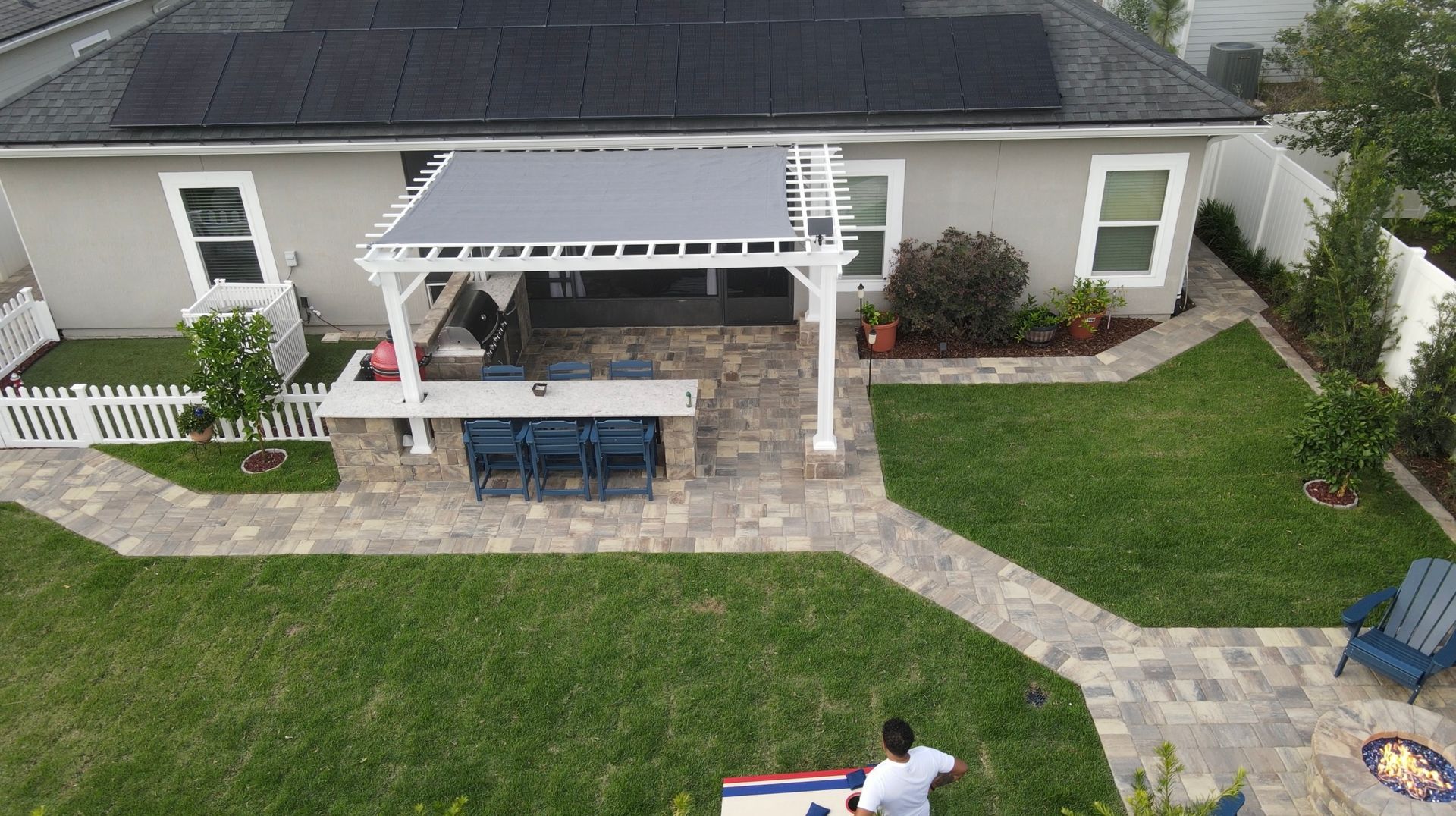
Backyard play areas: Families in Nocatee, Palencia, and St. Johns with kids and pets get the most out of artificial grass. It holds up to heavy foot traffic, drains quickly after rain, and stays clean without mud tracking into the house.
Pet areas: Artificial grass is easy to rinse clean and doesn't develop the dead spots that dogs cause in natural turf. High-quality turf with proper drainage backing handles pet use well.
Shaded areas: Natural grass struggles under tree canopy. Artificial turf thrives in full shade or partial shade with no thinning or bare patches.
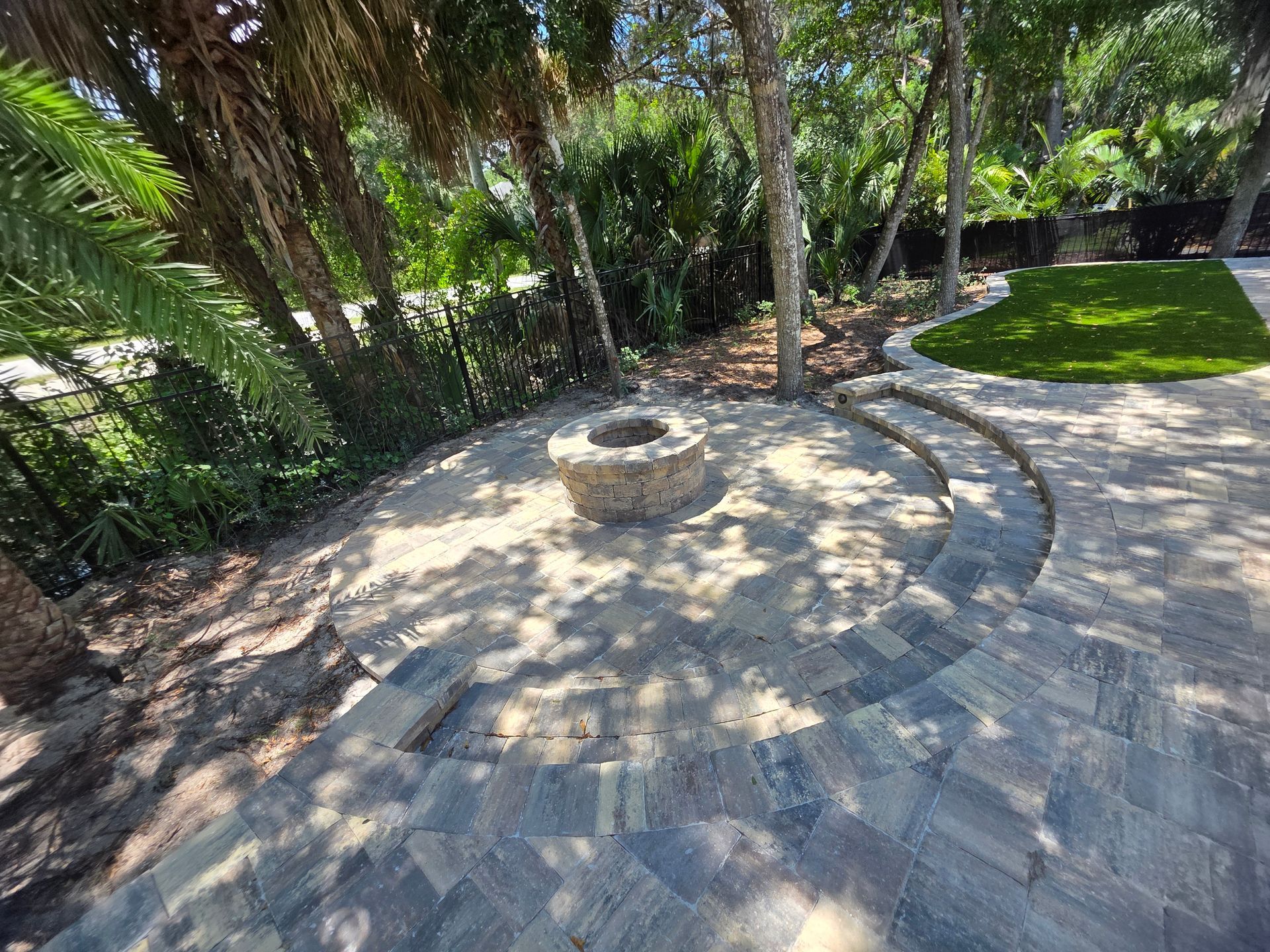
Poolside areas: Around pool decks, artificial grass creates a clean, barefoot-friendly surface that doesn't track debris into the water. It pairs well with paver borders for a finished look.
Low-maintenance front yards: For homeowners in World Golf Village or Bartram Springs who want curb appeal without ongoing maintenance, artificial turf in a front yard delivers consistent results year-round.
What Quality Artificial Grass Actually Looks Like
Not all artificial turf is the same. Low-quality turf installed without proper base preparation looks flat, fades quickly in Florida's UV, and doesn't drain well — leading to odor issues and standing water. Quality turf installed by an experienced contractor is a different product entirely.
High-quality artificial grass for Florida installations should have:
- UV-stabilized fibers that resist fading under intense sun exposure
- A realistic multi-blade design with varying blade heights and colors for a natural appearance
- Adequate drainage capacity to handle Florida's heavy rainfall without pooling
- Proper infill material to support blade structure and provide cushioning
- A compacted aggregate base that prevents shifting and ensures a level surface
The Installation Process
A proper artificial grass installation isn't just rolling out turf over existing dirt. Here's what the process looks like when it's done right:
- Site prep: Existing grass, roots, and debris are removed. The area is excavated to allow for the base layer.
- Base installation: A compacted crushed aggregate base is installed to provide stability and drainage. This is the most important step — a poorly compacted base leads to shifting and uneven surfaces over time.
- Weed barrier: A permeable landscape fabric is laid over the base to prevent weed growth without blocking drainage.
- Turf installation: The artificial grass is cut, fitted, and secured. Seams are positioned and joined carefully so they're not visible in the finished surface.
- Infill application: Infill material is spread across the turf and worked into the fibers to support blade structure and add weight to keep the turf in place.
- Final grooming: The turf is brushed to lift the blades and give the finished surface a natural, upright appearance.
What to Ask Before You Hire a Contractor
Artificial grass installation has grown quickly in Northeast Florida — and so has the number of contractors who cut corners on base preparation and turf quality. Before you commit, ask:
- What base depth do you install, and what aggregate do you use?
- What brand and product line is the turf, and what's the UV warranty?
- How do you handle seams, and can I see completed installations in St. Johns County?
- What infill material do you use, and why?
- What's the warranty on labor and materials?
A contractor who can't answer those questions specifically is worth walking away from.
Get a Free Estimate for Artificial Grass in Ponte Vedra Beach
We're a veteran-owned hardscape and outdoor living contractor serving Ponte Vedra Beach, St. Augustine, Nocatee, Palencia, St. Johns, World Golf Village, Vilano Beach, and the surrounding Northeast Florida coast. Chris and our team install artificial grass for backyards, pet areas, poolside spaces, and full outdoor living builds across St. Johns County and Duval County.
Ready to get started? Contact us or call us at (904) 896-6928 for your free estimate.