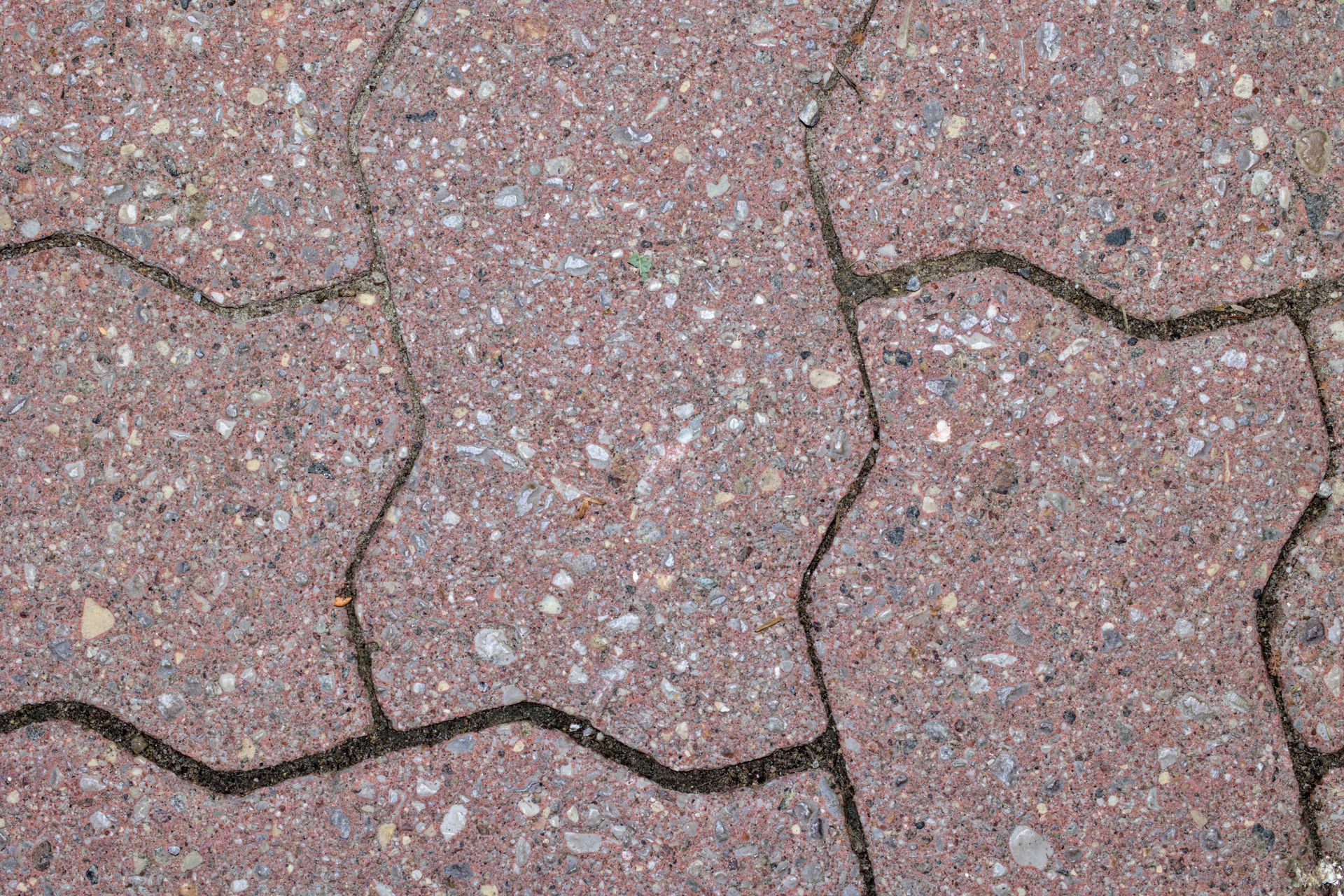

Pavers vs. Concrete: Which Is Right for Your St. Augustine Home?

It's one of the most common questions we get from St. Augustine homeowners planning a driveway, patio, or pool deck project: pavers or concrete? Both are solid choices, but they perform differently in Florida's climate, and the right answer depends on what matters most to you — upfront cost, long-term maintenance, or how the surface looks over time.


There's no universally correct answer here, which is part of why the debate keeps coming up. What changes the calculus for most homeowners is understanding how each material actually behaves over 10, 15, or 20 years in a Florida yard — not just how it looks on install day.


Upfront Cost

Poured concrete is typically the more affordable option upfront, especially for large, simple surfaces like a straight driveway. Pavers cost more initially due to material and labor-intensive installation, though the gap narrows with decorative concrete finishes like stamping or staining.


It's worth noting that the initial cost gap doesn't tell the whole financial story. Concrete's lower upfront price can be offset over time by repair and resurfacing costs that pavers largely avoid, which is why we encourage clients to think in terms of total cost of ownership rather than just the installation invoice.


Long-Term Durability in Florida's Climate

This is where pavers often pull ahead. Concrete is a single continuous slab, which means it cracks as one piece when the ground shifts — and Florida's sandy soil, heavy seasonal rain, and occasional freeze events all create that kind of movement over time. Pavers are individual units set on a compacted base, so they flex slightly with ground movement rather than cracking outright.

Humidity and rain also affect the two materials differently. Concrete can develop surface staining, efflorescence, or mildew growth in Florida's wet, humid conditions, especially in shaded areas. Pavers, particularly with a quality sealer, tend to resist staining better and are easier to spot-clean without leaving a visible patch.


Repair and Maintenance

This is the biggest practical difference. If a section of concrete cracks or stains, repairing it usually means patching or resurfacing a visible section that rarely blends perfectly with the surrounding slab. With pavers, a damaged unit can be individually removed and replaced without disturbing anything around it — a repair that's both cheaper and far less noticeable.

This matters more in Florida than in drier climates, since tree roots, irrigation runoff, and heavy rain events all increase the odds of needing a repair at some point over a surface's lifespan. Knowing the repair will be clean and localized rather than a visible patch job is a real factor in the decision for a lot of our clients.


Design Flexibility

Concrete can be stamped, stained, or scored for a decorative look, but pavers offer a wider native range of colors, shapes, and patterns without needing additional finishing work. For homeowners wanting a distinctive look — herringbone patterns, mixed materials, or a natural stone appearance — pavers typically deliver more design options straight out of the box.


Heat and Comfort Underfoot

Around pools and patios especially, surface temperature matters. Standard concrete and dark-colored pavers can get uncomfortably hot underfoot in direct Florida sun. Lighter-colored pavers and certain natural stone options like travertine stay noticeably cooler, which is worth factoring in for any surface near a pool deck.


Which One Fits Your Project

If budget is the primary driver and you're covering a large, simple area, concrete is often the practical choice. If long-term durability, easier repairs, and design flexibility matter more, pavers tend to be the better investment over the life of the surface — particularly for driveways and patios that will see years of Florida sun and rain.


Get a Recommendation for Your Property

Outdoor Transformations installs both pavers and concrete across St. Augustine and St. Johns County, and we'll walk you through which fits your project and budget. Call (904) 896-6928 or request a complimentary quote.
September 14, 2026
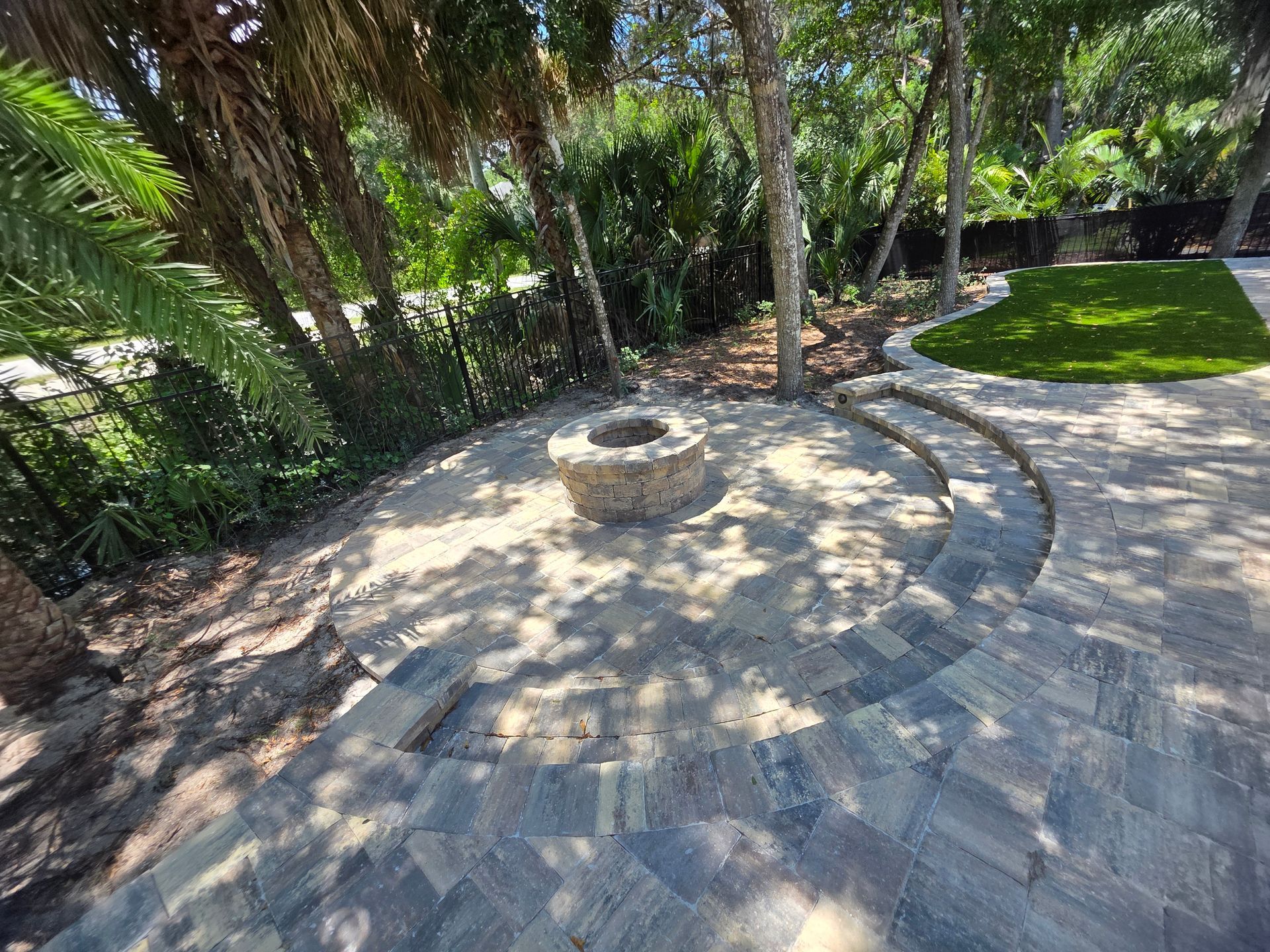
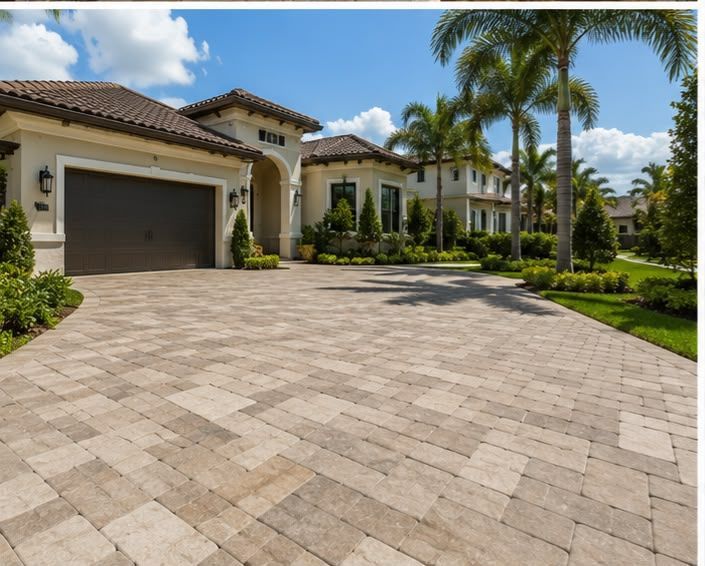
Atlantic Beach homeowners weighing a paver driveway usually have the same two questions: what's this actually going to cost, and what does the process look like start to finish. Both answers depend on a handful of factors specific to coastal Northeast Florida, not just square footage. A driveway is one of the first things anyone sees when they pull up to your home, and it's also one of the hardest-working surfaces on your property — daily vehicle weight, sun exposure, and in Atlantic Beach's case, salt air off the coast. Getting the material, base, and installation right the first time saves a lot of headaches down the road. What Actually Drives the Cost Material choice is the biggest variable. Our paver driveway installations use everything from standard concrete pavers to premium options like travertine, brick, and cobblestone, and the price spread between those is significant. Beyond material, the existing site condition matters — removing old concrete or asphalt, correcting drainage, and the total square footage all factor into the final number more than most homeowners expect going in. Other cost factors that often get overlooked: the complexity of the layout (a driveway with curves, multiple angles, or a circular turnaround costs more to cut and lay than a straight rectangle), how much excavation and grading the site needs before base work can even begin, and whether the project includes additional features like a paver apron connecting to the garage or a decorative border in a contrasting material. Why Atlantic Beach Sites Need Extra Planning Being this close to the coast changes a few things about the installation. Sandy, well-draining soil is actually an advantage for paver base preparation compared to heavier inland clay soils, but salt air exposure means material selection matters more — some paver finishes and sealers hold up to coastal conditions better than others over the long run. Drainage is another Atlantic Beach-specific consideration. Coastal properties often sit at a lower elevation relative to groundwater, and heavy seasonal rain events common to Northeast Florida summers mean a driveway needs proper slope and base drainage built in from the start, not added as an afterthought once water starts pooling. The Installation Process, Step by Step A typical paver driveway project starts with excavation to the proper depth, followed by a compacted base layer — usually crushed limestone or similar aggregate — that does the real structural work of supporting vehicle weight. A layer of bedding sand goes down next, then the pavers are set in the chosen pattern, cut to fit the edges, and compacted into place with a plate compactor. Polymeric sand is swept into the joints to lock everything together and resist weed growth, and edge restraints are installed to keep the whole system from shifting over time. Before any of that happens, though, a proper assessment walks the site to check existing grade, drainage flow, and whether old concrete or asphalt needs to be removed first. This step determines a lot about the final cost and timeline, which is why we don't quote a driveway project sight unseen. Choosing a Pattern and Material for a Driveway Not every pattern that looks good on a patio performs well on a driveway. Herringbone is generally considered the strongest interlocking pattern for vehicle traffic because the angled placement resists shifting in multiple directions at once — something a straight running-bond pattern can't do as effectively under the lateral force of tires turning in and out of a garage. Timeline Expectations Most residential driveway installations take a matter of days rather than weeks once work begins, though weather and site conditions can shift that. Unlike a concrete pour, there's no curing period before the driveway can be used — pavers are ready for vehicle traffic almost immediately after installation and compaction. This is one of the more underrated advantages of pavers versus concrete for homeowners who don't want to plan around a multi-day cure window. Maintaining a Paver Driveway Long-Term Once installed, a paver driveway is relatively low-maintenance, but a few habits extend its life significantly. Resealing every few years protects against UV fading and helps the joint sand resist washout during heavy rain. Addressing any individual settled or shifted pavers early — rather than waiting — prevents a small issue from spreading to neighboring pavers over time.  Get a Quote for Your Atlantic Beach Driveway Outdoor Transformations installs paver driveways throughout Atlantic Beach and greater St. Johns and Duval County. Call (904) 896-6928 or request a complimentary quote to see what your project would actually cost.
July 6, 2026
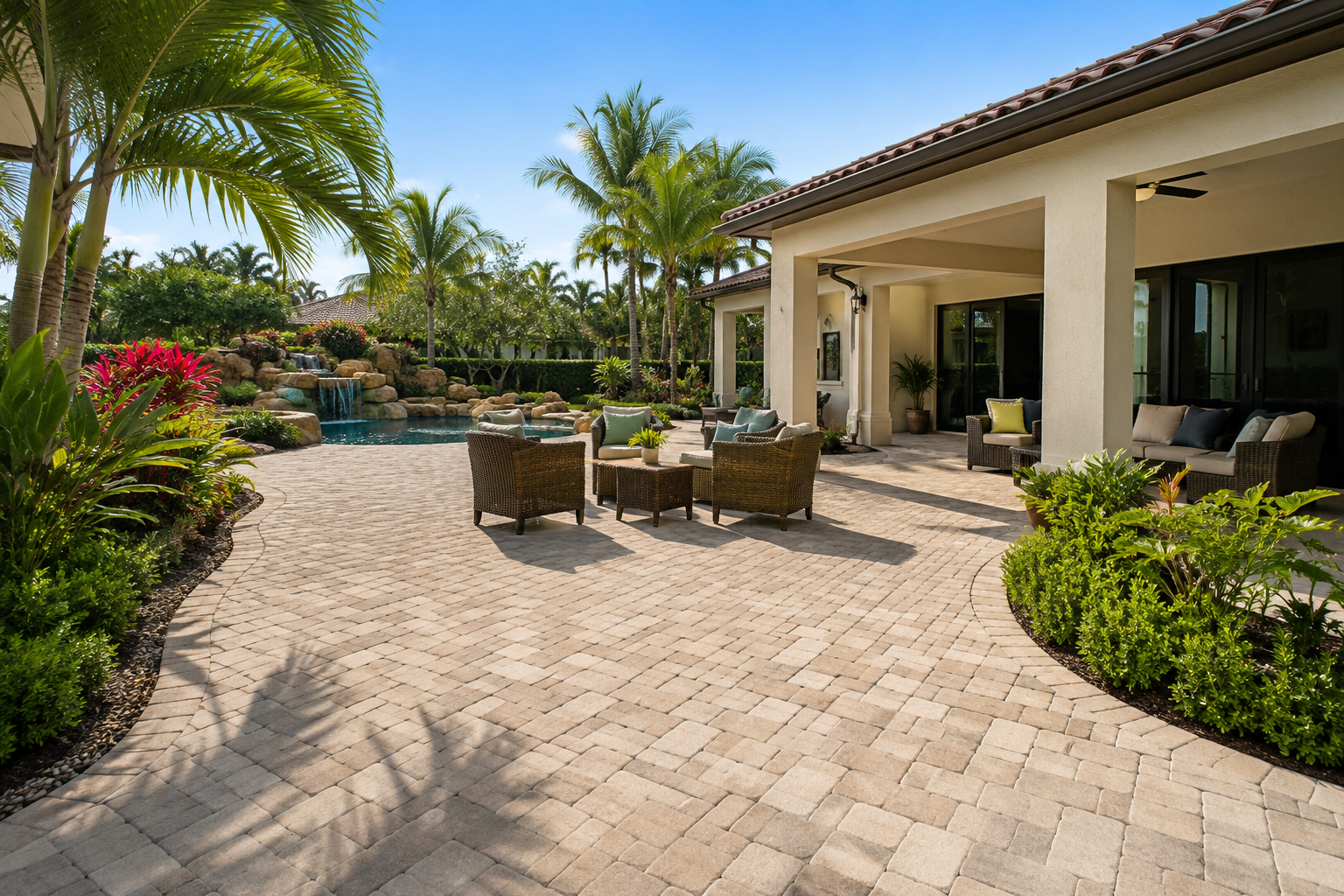
Paver Patios in St. Augustine, FL: Design Ideas, Materials, and What to Expect
June 29, 2026
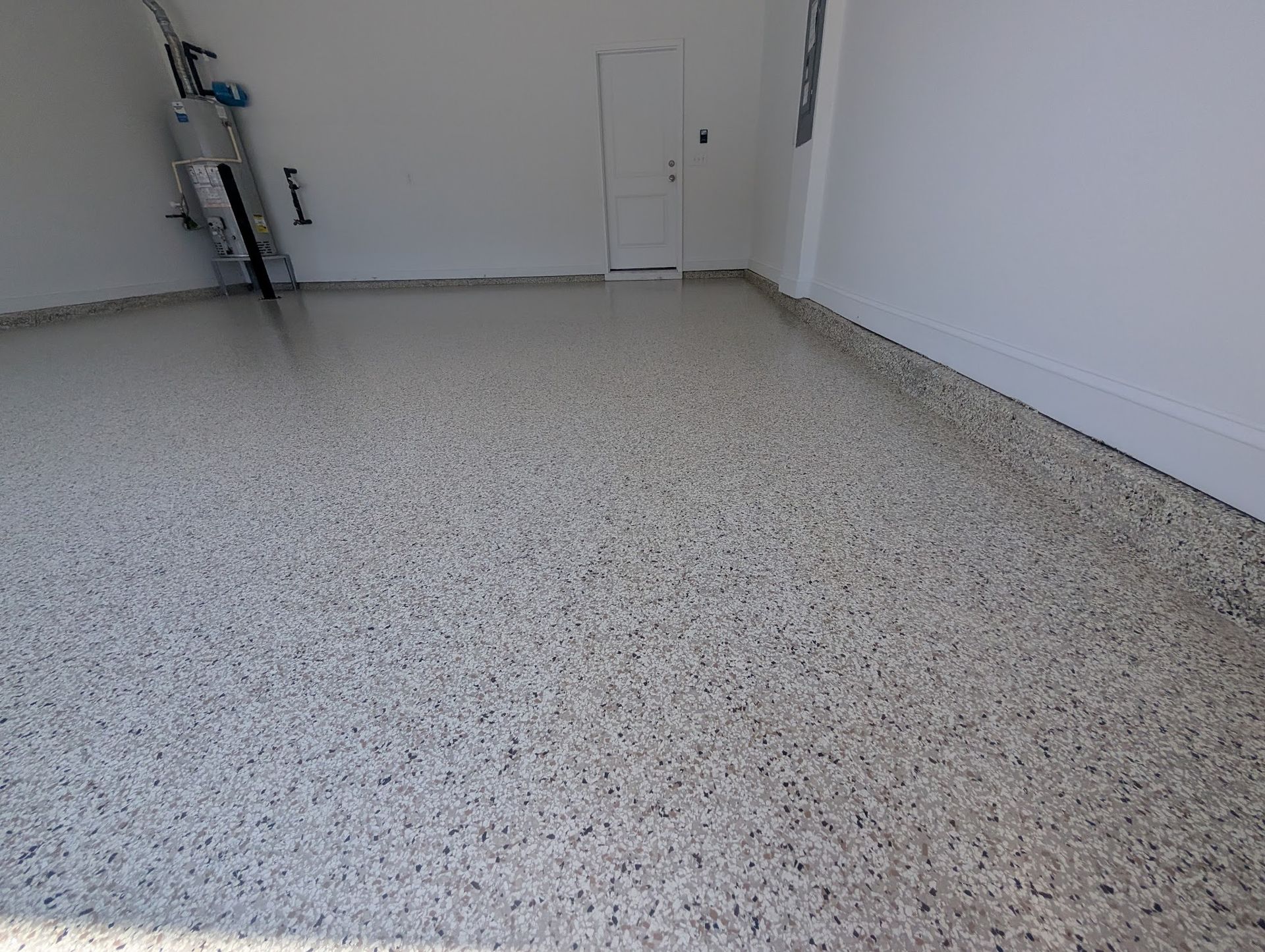
Epoxy Garage Floor Coating in St. Johns County, FL: Heat, Humidity, and What Actually Holds Up
June 12, 2026
How Much Does a Paver Patio Cost in St. Augustine, FL?
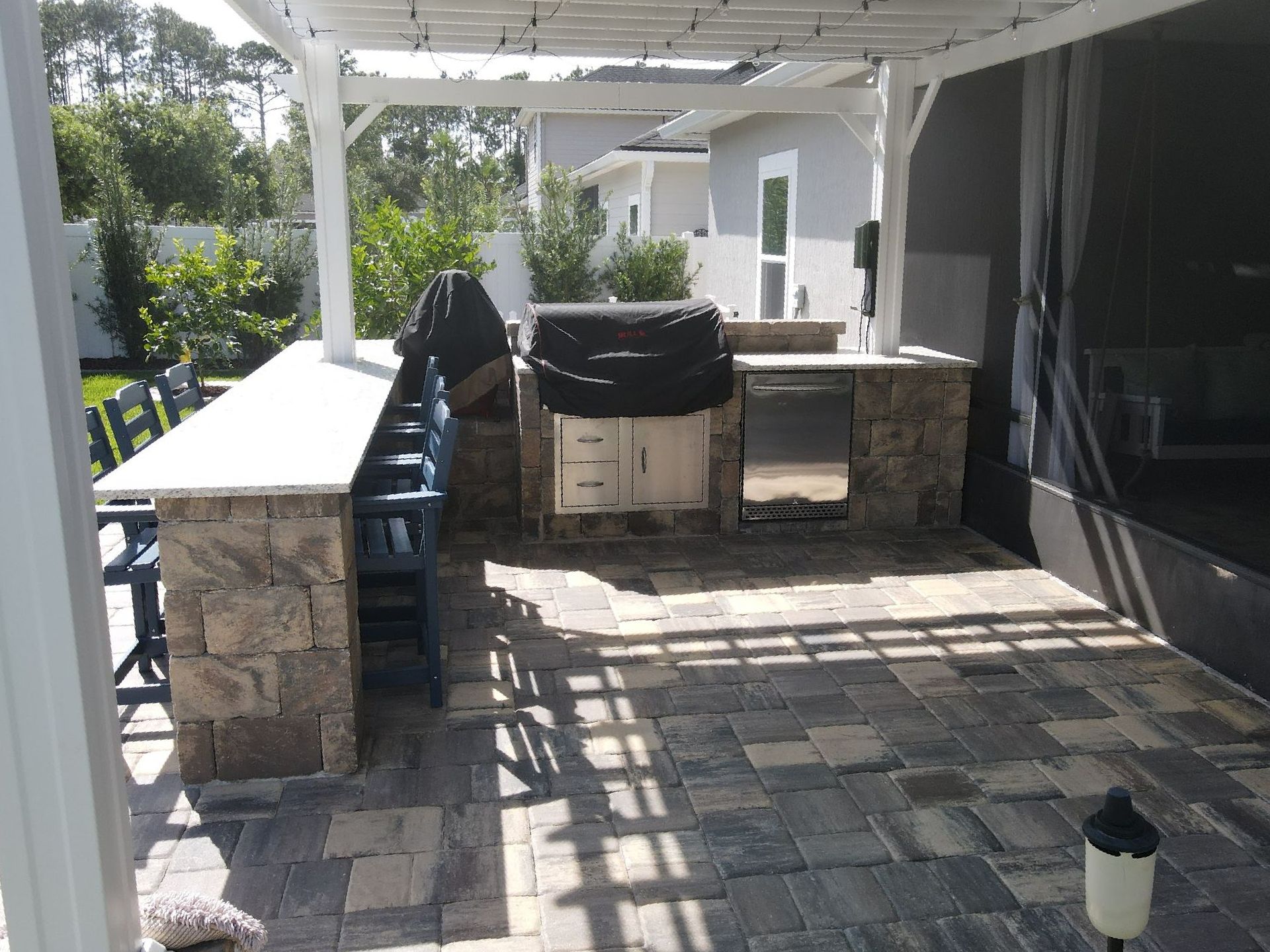
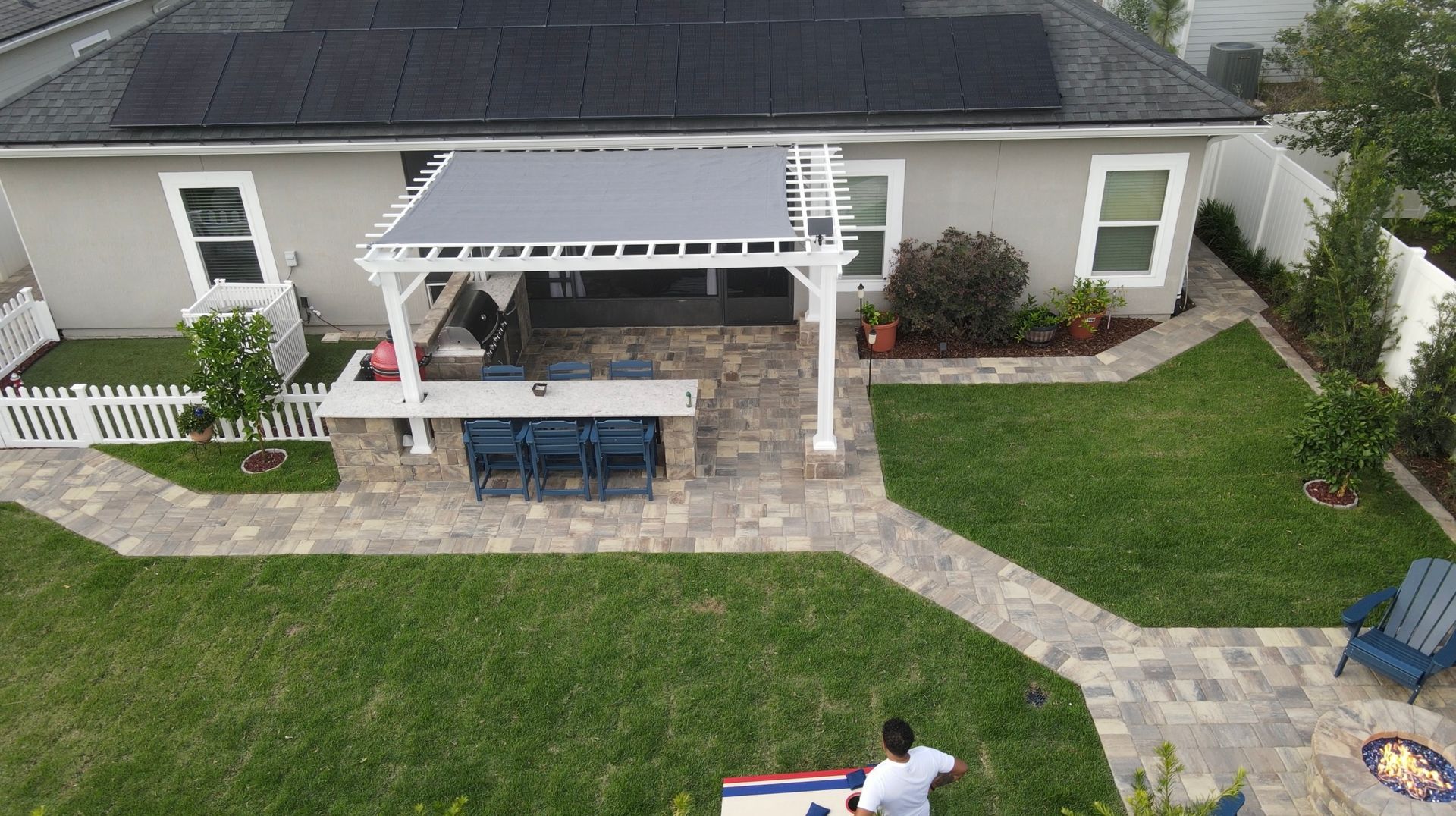
Covered patio with stone pavers, outdoor grill, long counter, and seating by a house
May 15, 2026
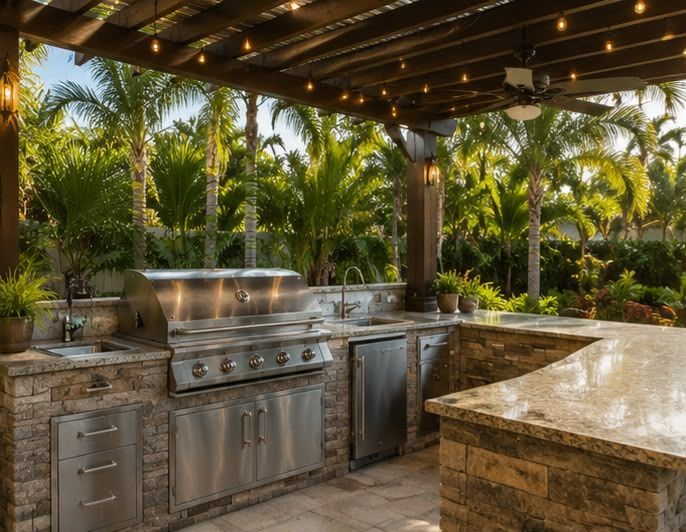
Learn how to design an outdoor kitchen that stays functional, comfortable, and durable year-round in Florida’s climate.
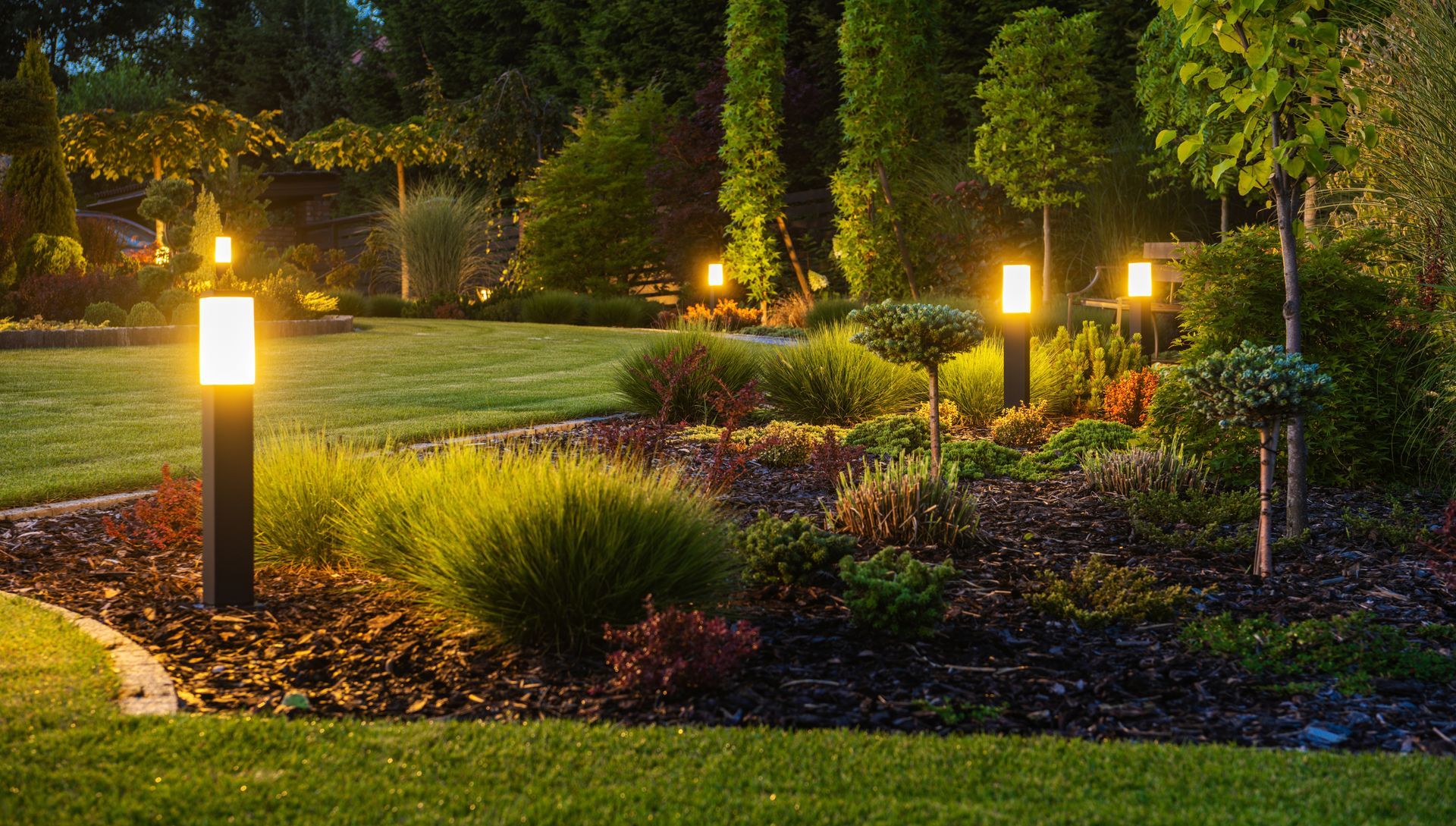
Illuminated garden path with glowing lanterns, shrubs, and lush greenery at dusk
April 20, 2026
Discover outdoor lighting tips that improve mood, safety, and style in entertaining spaces. Outdoor Transformations in St. Augustine, FL.