
Covered vs. Open-Air Paver Patios: Which Fits Your St. Augustine Backyard?
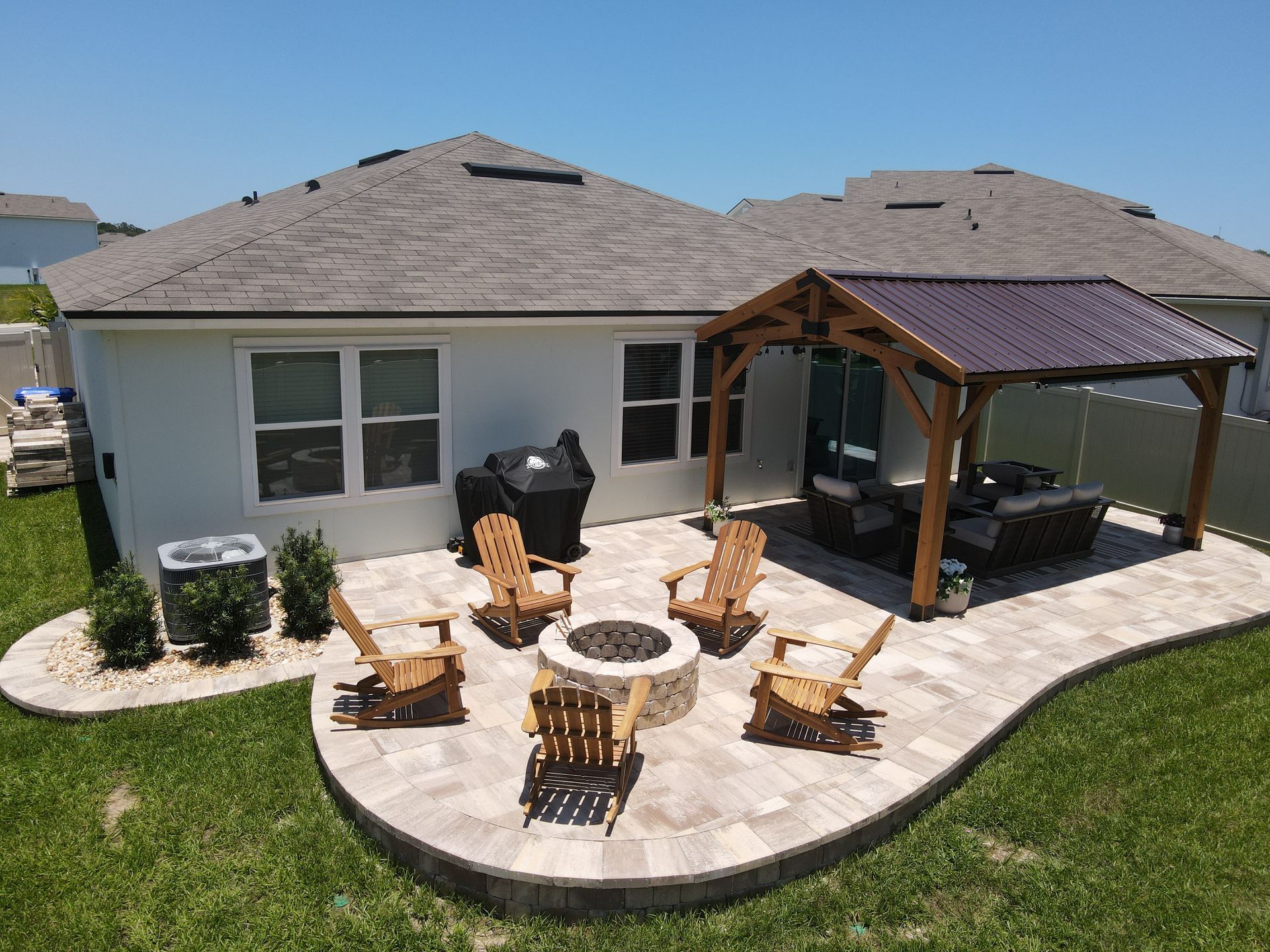
One of the first big decisions in any St. Augustine patio project isn't the paver color or pattern — it's whether the space will be covered or open to the sky. Both options work well in Florida, but they solve different problems and suit different ways of using a backyard.
Florida's climate makes this decision more consequential than it would be in a milder region. Intense summer sun, frequent afternoon thunderstorms, and high humidity all affect how comfortable and usable a patio actually is depending on which direction you go.
What an Open-Air Patio Offers
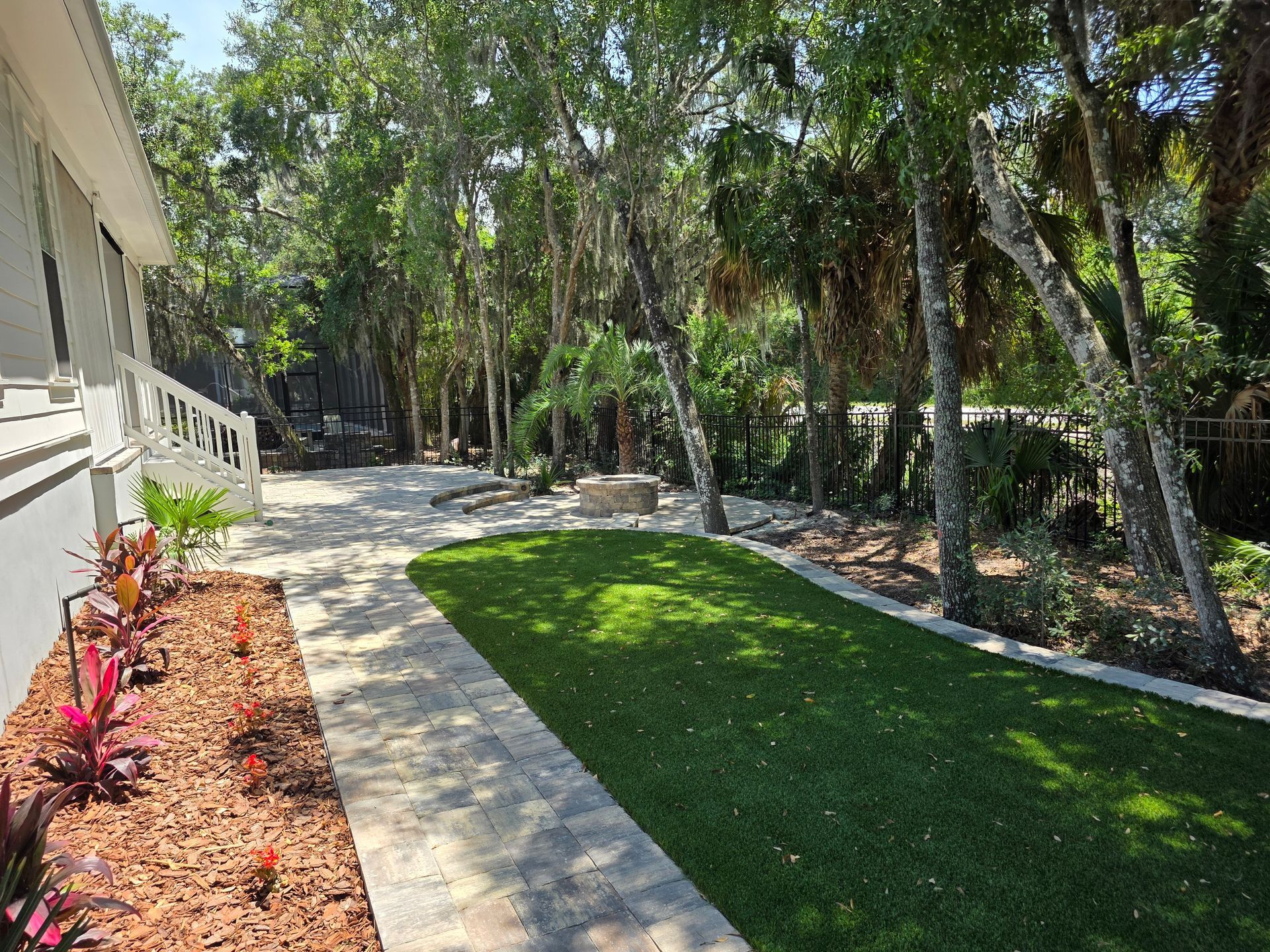
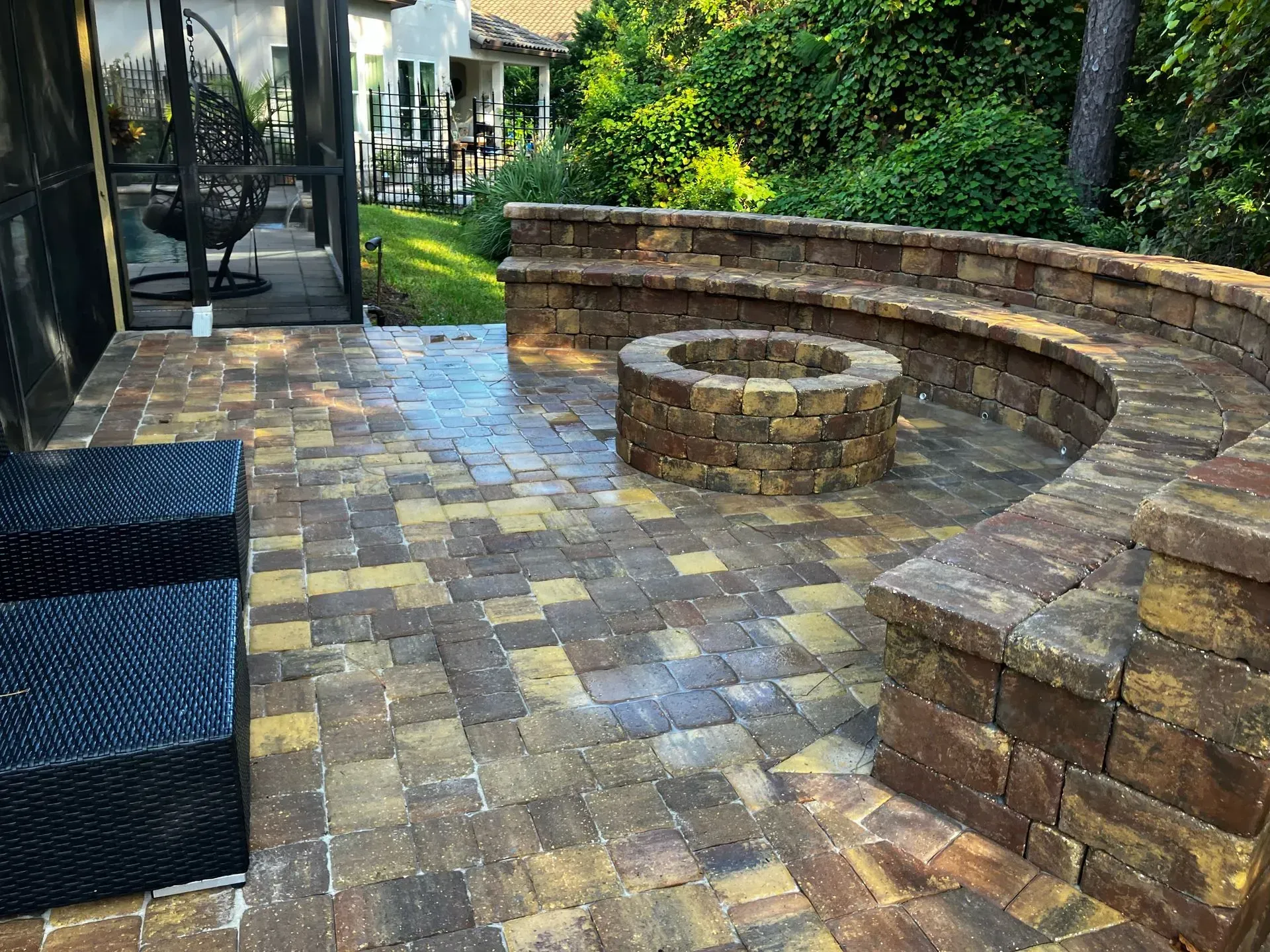
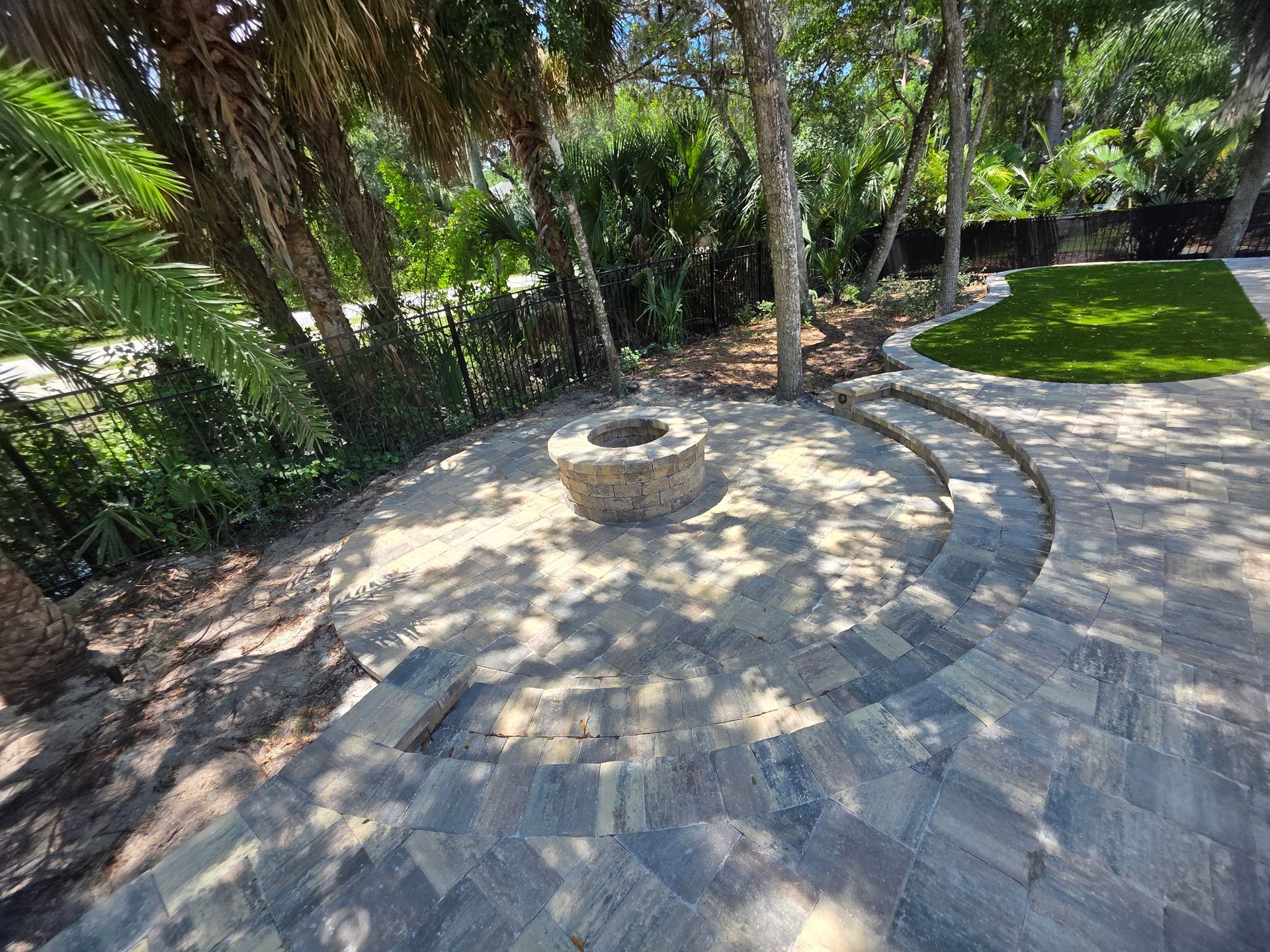
An uncovered paver patio gives you a space that feels like a natural extension of the yard — unobstructed sky views, easy integration with surrounding landscaping, and typically a lower overall project cost since there's no roof structure to engineer and build. It also tends to suit homeowners who use their patio mainly in the evenings or during cooler months, when direct sun is less of a factor.
What a Covered Patio Offers
A covered patio — whether a solid roof extension, a pergola, or a screened structure — extends how much of the year and day the space is actually usable. In St. Augustine's climate, shade isn't a luxury so much as a practical requirement for using an outdoor space comfortably through the hottest stretch of summer. A cover also protects furniture, cushions, and any built-in features like a kitchen or fireplace from direct sun fading and rain exposure.
The Rain Factor
Northeast Florida's summer thunderstorm pattern is worth planning around specifically. Afternoon storms are frequent and often arrive with little warning, which means an open patio can go from usable to unusable in minutes during peak season. A covered patio, even a partial one, keeps the space functional through these sudden downpours rather than forcing everyone inside.
Partial Coverage: The Middle Ground
Many of our clients land on a hybrid approach — a partially covered patio with an open section for sun, paired with a pergola or shade sail over the seating or dining area. This is often combined with outdoor lighting so the covered portion becomes the evening gathering spot while the open section stays flexible for daytime use.
Cost and Structural Considerations
A covered patio naturally costs more than an open one due to the added structure, but the gap varies significantly depending on whether you're looking at a simple pergola, a solid-roof extension tied into the home, or a full outdoor living room with a kitchen and fireplace underneath. It's worth discussing structural options early in the design process, since retrofitting a cover onto an already-built open patio is more disruptive and costly than planning for it from the start.
Humidity and Material Considerations
Covered areas with less direct sun and airflow can actually hold more humidity at the surface level, which makes material and sealer choice matter more under a roof than in full sun. We factor this into material recommendations differently depending on whether a patio will be covered or open.
Which One Fits Your Lifestyle
If your backyard use skews toward evening entertaining, occasional weekend gatherings, or you're working with a tighter budget, an open-air patio delivers strong value. If you want a space that functions as genuine outdoor living square footage — usable daily, through rain and midday heat — a covered or partially covered design is worth the additional investment.
Start Planning Your St. Augustine Patio
Outdoor Transformations designs both covered and open-air paver patios across St. Augustine and St. Johns County, and we'll help you weigh the trade-offs for your specific lot and budget. Call (904) 896-6928 or request a complimentary quote.